….Ayanga, callers describe constitutional amendment plan as misplaced priority
…..Citizens urge lawmakers to focus on insecurity, welfare and accountability
By Peter Taiwo
Analysts and members of the public have rejected a proposal seeking to introduce a single six-year tenure for Nigeria’s president and state governors, describing the move as a distraction from more pressing national issues.
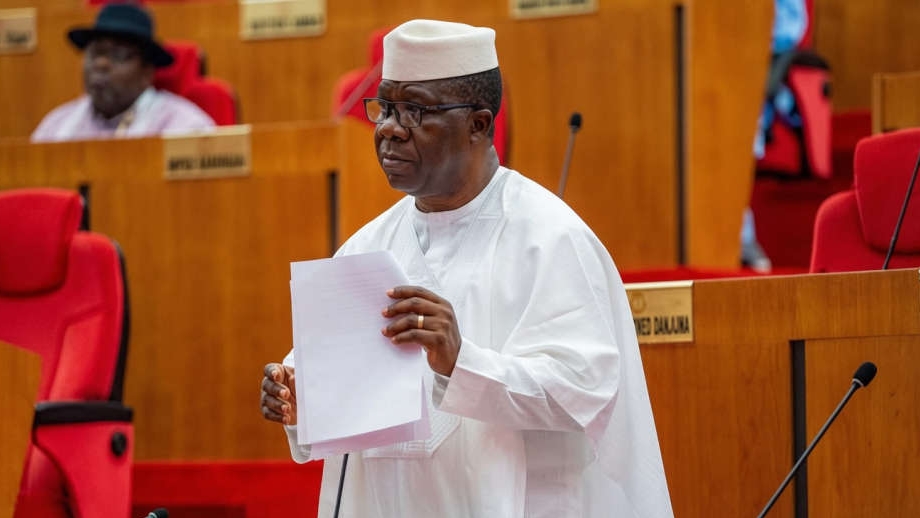
The proposal, championed by Senate Leader Opeyemi Bamidele, seeks a constitutional amendment that would replace the current two four-year terms with a single, non-renewable six-year term for elected executives.
Bamidele recently disclosed his intention to sponsor the bill when the National Assembly reconvenes after the 2027 general elections. According to him, the reform is aimed at reducing political distractions associated with re-election campaigns and allowing leaders to focus fully on governance.
Speaking during Eagle 102.5 FM’s public affairs programme, Frontline, public affairs analyst and Chairman of the Ijebu North East Forum, Bayo Ayanga, said the proposal was not entirely new.
Ayanga recalled that former President Goodluck Jonathan had canvassed a similar arrangement more than a decade ago, proposing a single five-year tenure for elected executives.
According to him, Jonathan’s argument at the time was that the pursuit of second-term ambitions often generated political tension and diverted attention away from governance.
“What he said is not new. We remember very well in 2012 or 2013 when former President Goodluck Jonathan came up with the idea of a five-year single tenure. One of the points he made was that the desire for a second term creates a lot of chaos in politics,” Ayanga stated.
Despite acknowledging the rationale behind the proposal, participants in the programme largely opposed the idea, insisting that Nigeria’s governance challenges stem from leadership and accountability issues rather than the duration of tenure.
A caller from Ago-Iwoye, AbdulWasiu, described the proposal as an unnecessary diversion from critical issues confronting the nation.
He argued that a four-year term provides sufficient time for any committed leader to make a meaningful impact on the lives of citizens.
AbdulWasiu cited the records of former governors such as Chief Olabisi Onabanjo, Lateef Jakande, Chief Bola Ige and Ambrose Alli, who he said left enduring legacies within relatively short periods in office.
“For me, it is just a way of diverting attention. Nigerians are yearning for good governance. Four years is enough for any serious leader to deliver on campaign promises,” he said.
He further urged lawmakers to focus their attention on addressing insecurity and other challenges affecting citizens across the country.
Another caller, Prince Suleiman Hassan, also dismissed the proposal, maintaining that it does not address the immediate needs of Nigerians.
According to him, legislative efforts should be directed toward policies that improve living standards, strengthen social welfare programmes and provide support for vulnerable groups, particularly the elderly.
“It is just a distraction. It makes people forget what they are really expecting lawmakers to address,” Hassan said.
He questioned why constitutional reforms on tenure length appeared to receive more attention than initiatives aimed at improving citizens’ welfare.
Also contributing to the discussion, Oscar from Ijebu-Ode argued that Nigeria’s democratic challenges are rooted in the wide gap between public office holders and the citizens they serve.
He said many government policies fail because political leaders do not directly experience the consequences of the decisions they make.
According to him, economic reforms and social policies would attract greater urgency if public officials were subjected to the same realities faced by ordinary Nigerians.
Oscar maintained that accountability remains the missing link in the nation’s governance structure.
He argued that extending or reducing tenure would have little impact unless leaders are held responsible for their actions while in office.
“Whether you give them ten years or a single tenure, accountability is what matters most,” he stated.
The reactions reflect growing public scepticism toward constitutional amendments focused on tenure reforms, with many citizens insisting that transparency, effective leadership and accountability should take precedence.
While Bamidele acknowledged that the proposal represents his personal conviction and could attract opposition, he maintained that democratic institutions must continue to evolve through legislative reforms.
The concept of a single tenure is not new in Nigeria’s political discourse. Variations of the proposal have previously received support from notable political figures, including Oyo State Governor Seyi Makinde, Anambra State Governor Chukwuma Soludo and former Vice President Atiku Abubakar.
However, previous legislative attempts to introduce similar tenure arrangements failed to progress beyond the second reading stage in both 2019 and 2024.