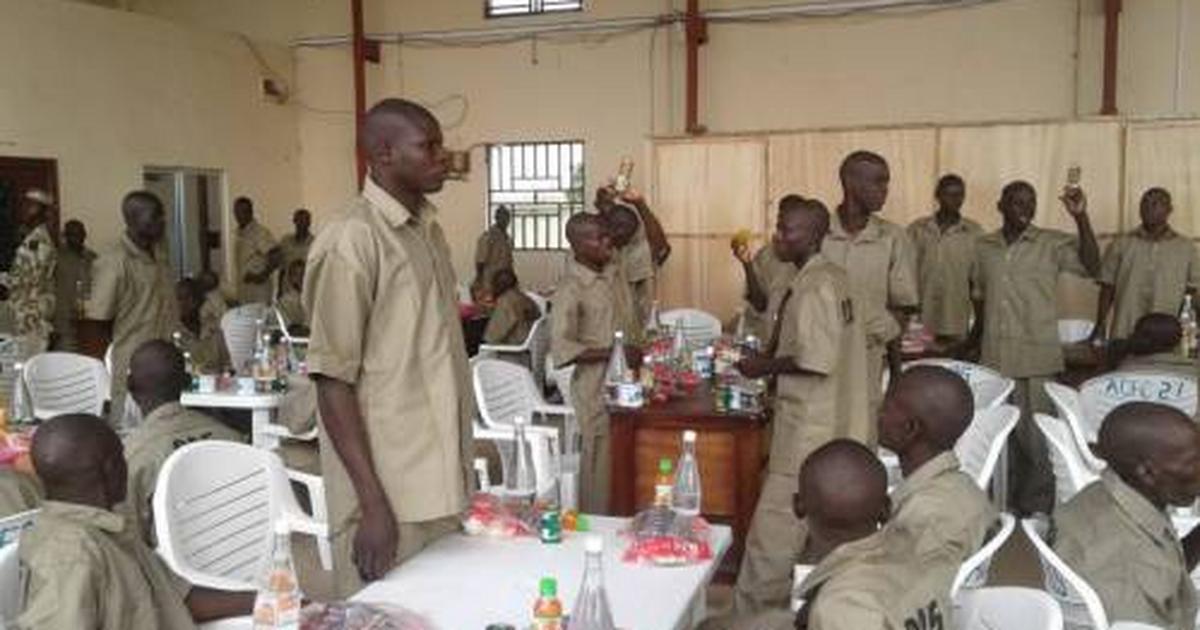
— Millions spent on infrastructure, consultancy under Operation Safe Corridor
— Critics warn of weak justice, neglect of victims
By Our Correspondent
Nigeria’s non-kinetic counterterrorism strategy has come under renewed scrutiny following revelations that the Federal Government has spent over N604.8 million on the rehabilitation and reintegration of repentant insurgents.
Latest records sourced from Govspend, a civic accountability platform, show that a total of N604,825,797.09 has been channelled into infrastructure, consultancy services and statutory tax obligations tied to the government’s deradicalisation programme, Operation Safe Corridor.
The expenditure covers dormitory construction, facility upgrades and professional services aimed at supporting the rehabilitation of former fighters.
One of the contracts includes a N47.4 million consultancy fee paid to ENCLEF Project & Consultants Ltd in December 2022 for supervision and preparation of a bill of quantities at the Kirikiri Medium Security Custodial Centre.
In the North-East, EL-HABY Concept Ltd received N41.7 million in December 2024 for additional dormitory construction in Mallam Sidi, Gombe State—one of the key reintegration centres.
However, the largest share of the funds went to FOSAB Global Energy Service Ltd, which handled multiple construction phases. The company received N151.9 million in May 2024, alongside earlier payments of N303.8 million in March 2023 for the development of rehabilitation facilities.
These transactions also attracted statutory deductions, including millions of naira remitted to the Federal Inland Revenue Service as VAT and withholding taxes.
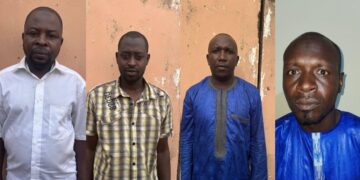
Government data indicates that 744 individuals—comprising 736 Nigerians and eight foreign nationals—have so far passed through the programme.
Beneficiaries are largely drawn from Borno State, with others from Yobe, Kano, Bauchi and Adamawa States.
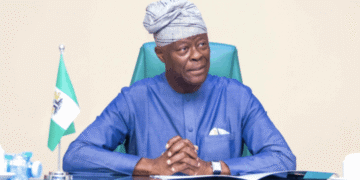
Defending the initiative, Chief of Defence Staff, General Olufemi Oluyede, described the programme as a long-term security strategy designed to weaken extremist ideology and reduce violence. According to him, rehabilitation is not leniency but a necessary tool in modern counterterrorism.
Programme officials also maintain that participants undergo structured reorientation, vocational training and psychosocial support, noting that many were forced into insurgency.
Despite these assurances, the programme continues to generate controversy.
The African Democratic Congress (ADC), through its spokesperson Bolaji Abdullahi, criticised the policy, arguing that prioritising rehabilitation over accountability signals weakness in addressing terrorism.
Similarly, Dr. Omenazu Jackson of the International Society for Social Justice and Human Rights condemned the approach, describing it as a “betrayal of justice” that undermines public trust and ignores victims.
He warned that rehabilitation without prosecution risks encouraging impunity, stressing the need for compensation and justice mechanisms for affected communities.
The debate comes amid earlier disclosures that over 5,000 former Boko Haram fighters have been reintegrated into society, with authorities claiming low recidivism rates.
As spending continues to rise, questions remain over transparency, long-term effectiveness, and whether Nigeria’s peace-through-reintegration model adequately balances justice with security.