…Global shocks, rising costs drag 2026 outlook
..Inflation control and oil dynamics key to recovery
Nigeria’s economic growth is projected to rise to 4.3 per cent by 2027, surpassing forecasts for several advanced economies, according to the International Monetary Fund (IMF).
The projection, contained in the IMF’s latest World Economic Outlook (WEO), signals a gradual recovery trajectory for Africa’s largest economy despite prevailing global uncertainties.
The report, unveiled at the ongoing IMF-World Bank Spring Meetings in Washington, D.C., indicates that Nigeria’s growth will rebound from a revised estimate of 4.1 per cent in 2026 and 4 per cent in 2025.
At the projected 4.3 per cent growth rate, Nigeria is expected to outperform several advanced economies, including the United States (2.1%), Canada (1.9%), Spain (1.8%) and the United Kingdom (1.3%).
Other economies projected to trail Nigeria include Germany (1.2%), France (0.9%), Japan (0.6%) and Italy (0.5%).
However, the IMF clarified that stronger growth rates do not imply that Nigeria’s economy will surpass these countries in overall size or economic output.
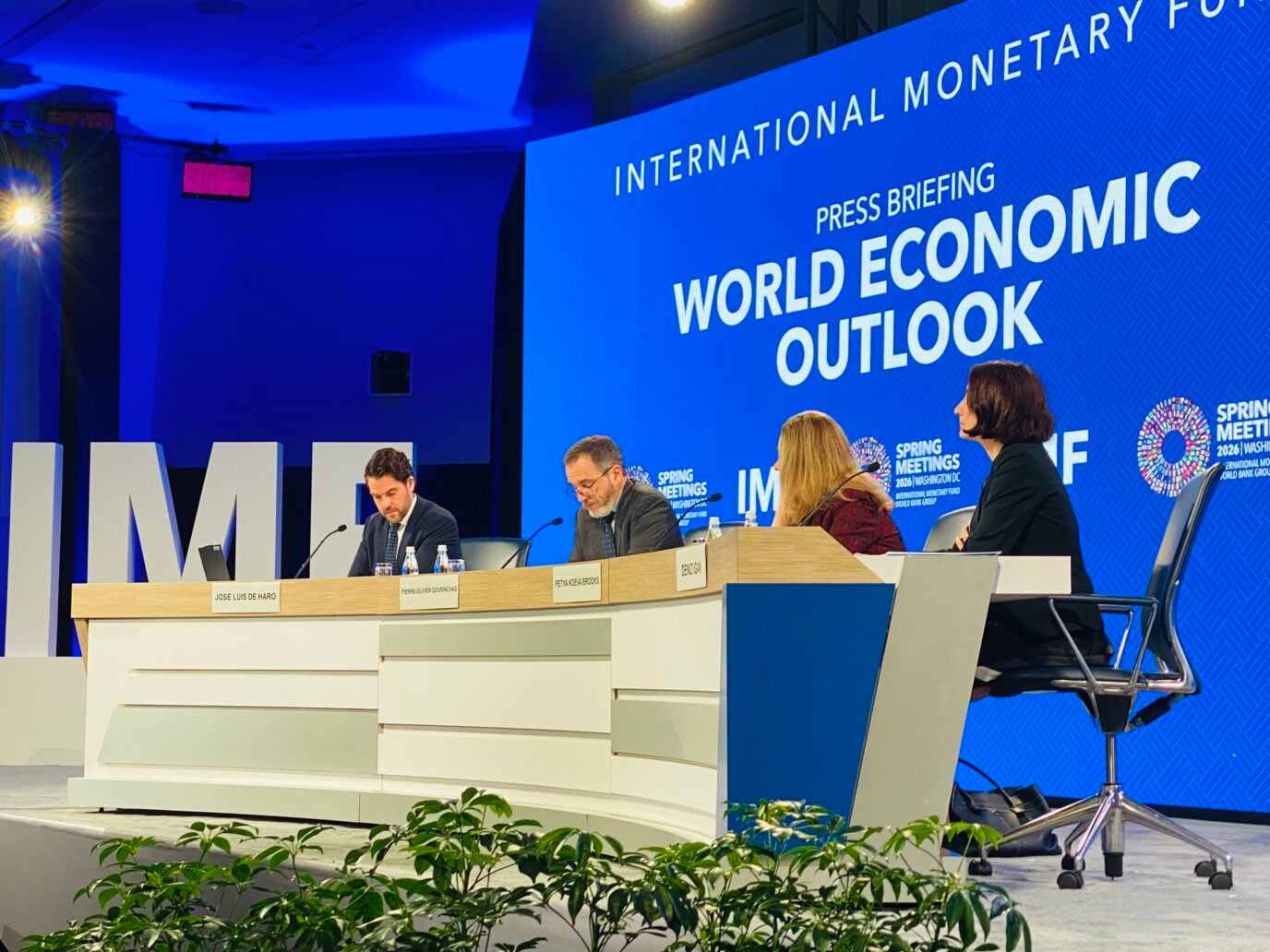
Speaking during a media briefing, IMF Division Chief, Deniz Igan, attributed the downward revision of Nigeria’s 2026 growth outlook to global disruptions, particularly the impact of conflict-induced increases in fuel, fertiliser and shipping costs.
She explained that these pressures are expected to weigh on oil sector performance, although higher crude prices may provide partial relief.
According to Igan, the combined effect of these factors results in a moderated outlook for 2026, with a stronger recovery anticipated in 2027.
On monetary policy, the IMF emphasised the importance of sustained vigilance in managing inflation, noting that exchange rate stability and inflation expectations would play a critical role in achieving price stability.
The Central Bank of Nigeria has set a medium-term target of reducing inflation to a single-digit range of between six and nine per cent as part of its transition to an inflation-targeting framework.
Globally, the IMF projects a slowdown in economic expansion, with growth expected to ease to 3.1 per cent in 2026 and 3.2 per cent in 2027, down from approximately 3.4 per cent recorded in 2024 and 2025.
The Fund noted that the downgrade reflects the lingering effects of geopolitical tensions, particularly the ongoing conflict in the Middle East, which has disrupted energy markets and global supply chains.
Headline inflation worldwide is projected to rise to 4.4 per cent in 2026 before moderating to 3.7 per cent in 2027, indicating persistent price pressures.
For sub-Saharan Africa, the IMF highlighted a mixed outlook, noting that while 2025 showed resilience, the region now faces renewed challenges, including weaker global demand, softer commodity prices and declining foreign aid.
Igan disclosed that growth in the region has been revised downward by a cumulative 0.4 percentage points for 2026 and 2027, while inflation is expected to rise from 3.4 per cent in 2025 to five per cent in 2026.
She warned that rising fertiliser costs, environmental pressures and food insecurity remain significant risks, particularly for economies heavily dependent on agriculture.
Also speaking, IMF Chief Economist Pierre-Olivier Gourinchas said the Fund is closely monitoring developments in global energy markets in collaboration with institutions such as the World Bank and the International Energy Agency.
He stressed the need for a swift resolution of geopolitical conflicts to stabilise markets and support global recovery.
The IMF’s outlook underscores both the opportunities and vulnerabilities facing Nigeria, as policymakers balance reform efforts with external shocks in a rapidly evolving global economy.