The Federal Government has constituted an inter-agency technical committee to scrutinise a proposed $200 billion integrated gas, power and high-speed rail project, underscoring the need for rigorous due diligence before any final approval.
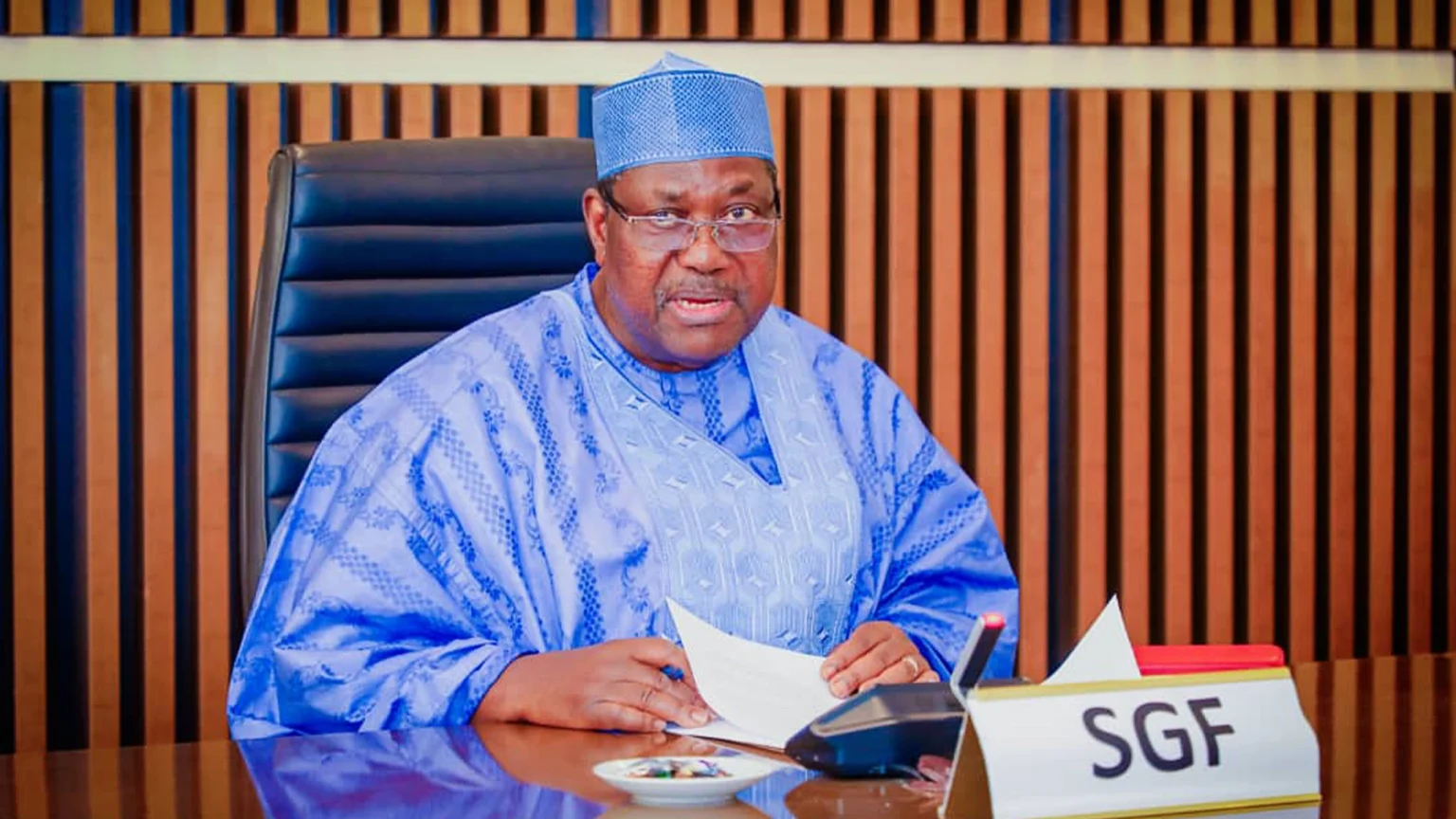
Inaugurating the panel in Abuja on Thursday, the Secretary to the Government of the Federation, George Akume, tasked members to carry out a thorough, objective and professional review of the proposal in line with national interest.
He said the committee’s work is critical to ensuring that government decisions on the ambitious infrastructure plan are guided by credible technical analysis, financial verification and regulatory compliance.
The proposal, submitted by De-Sadel (Nig.) Limited in partnership with China Liancai Petroleum Investment Holdings Limited, outlines a multi-phase programme combining gas development, power generation and transmission, alongside a 4,000-kilometre high-speed rail network linking key economic corridors such as Lagos, Abuja, Kaduna, Kano and Port Harcourt.
Akume said while the project holds significant potential to transform transportation, strengthen energy security and stimulate industrial growth, it must undergo comprehensive scrutiny to determine its feasibility and alignment with national priorities.
He disclosed that relevant security, financial intelligence and regulatory agencies had already provided preliminary inputs, particularly on funding arrangements and the entities involved, reinforcing the need for a coordinated technical review.
The committee draws membership from critical ministries, departments and agencies, including those responsible for transportation, petroleum resources, finance, justice and environment, as well as regulatory and security institutions.
Its terms of reference include verification of proof of funds and funding commitments by the promoters, assessment of fiscal and contingent liabilities, and evaluation of the project’s financing model.
The panel is also expected to assess the technical competence of the project partners and contractors, review rail infrastructure design and implementation plans, examine local content provisions, and ensure compliance with Public-Private Partnership regulations.
In addition, it will identify potential security, intelligence and reputational risks associated with the project and advise the government on readiness for presidential consideration and subsequent approval by the Federal Executive Council.
Presenting an overview of the proposal, Managing Director of De-Sadel Consortium, Samuel Ukoh, described the project as a transformative infrastructure initiative capable of redefining Nigeria’s economic landscape.
He said the full plan includes a nationwide 4,000-kilometre high-speed rail network across all states and the Federal Capital Territory, supported by integrated power generation, gas supply systems, fibre optic infrastructure and real estate developments around major stations.
Ukoh disclosed that the first phase will cover a 1,700-kilometre corridor linking Abuja, Lagos, Kano and Port Harcourt, with trains expected to operate at speeds of up to 350 kilometres per hour, cutting travel time between Lagos and Abuja to about two hours and 30 minutes.
He added that the initial phase would generate about 3,500 megawatts of electricity to power the rail system, while the entire project is projected to deliver up to 8,500 megawatts.
The consortium, he said, is proposing an elevated bridge design for the rail infrastructure, which would also support electricity transmission lines and fibre optic cables, enabling integrated deployment of transport, power and digital connectivity.
Ukoh emphasised that Nigeria’s vast gas reserves would provide the primary energy base for the project, ensuring sustainable operations.
Akume formally declared the committee inaugurated and expressed confidence that members would deliver a comprehensive report within the timeframe to be communicated by the secretariat