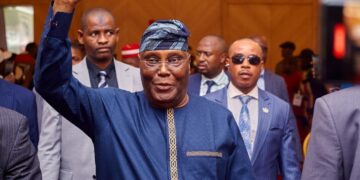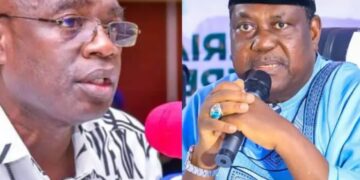
Former presidential candidate, Gbenga Hashim, has renewed calls for national reflection on the sacrifices that paved the way for Nigeria’s democratic rule, warning that present-day political realities require heightened vigilance from both citizens and leaders.
In a statement titled “Reminiscence: The Price of Our Democracy,” Hashim recounted his detention in the late 1980s, describing it as part of a broader struggle marked by repression and resistance. He emphasized that the freedoms Nigerians enjoy today were earned through “incarceration, tears, blood, and, for many, the ultimate price.”
His remarks come amid growing national discourse on governance and accountability under the administration of Bola Ahmed Tinubu, with increasing scrutiny on the direction of political leadership and democratic institutions.
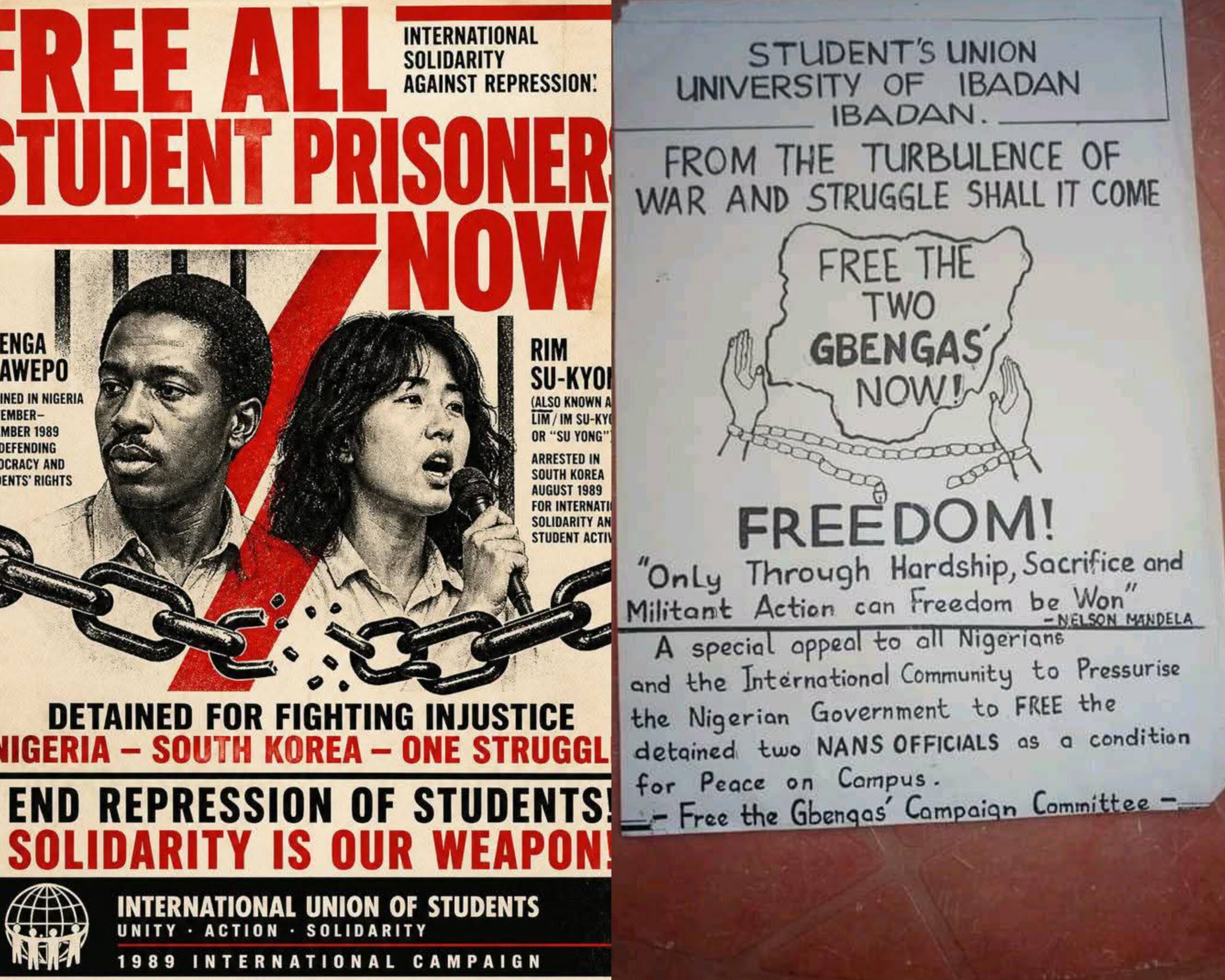
Hashim disclosed that two significant historical artifacts had recently resurfaced, offering insight into the international and grassroots dimensions of the pro-democracy movement. One was a December 1989 publication by the International Union of Students, which highlighted a global campaign for his release alongside South Korean student activist Rim Suyong. In the absence of an official photograph, the publication used an illustrative image to represent him.
The second artifact, he noted, was a handmade protest poster demanding the release of himself and his colleague, Gbenga Komolafe, underscoring the solidarity that existed both locally and internationally during that period of resistance.
Reflecting on Nigeria’s current democratic journey, Hashim acknowledged the progress made since the return to civil rule but warned against complacency. He stressed that the core ideals of the struggle—freedom, justice, and accountable governance—must be actively protected and sustained.
“Our generation stood at the forefront of a global pro-democracy movement that swept across Africa, Eastern Europe, and Asia,” he said, adding that safeguarding democracy is now a collective responsibility.
His comments align with ongoing national conversations around political reforms, electoral integrity, and civic participation, as analysts continue to assess the resilience of Nigeria’s democratic institutions in the face of emerging challenges.