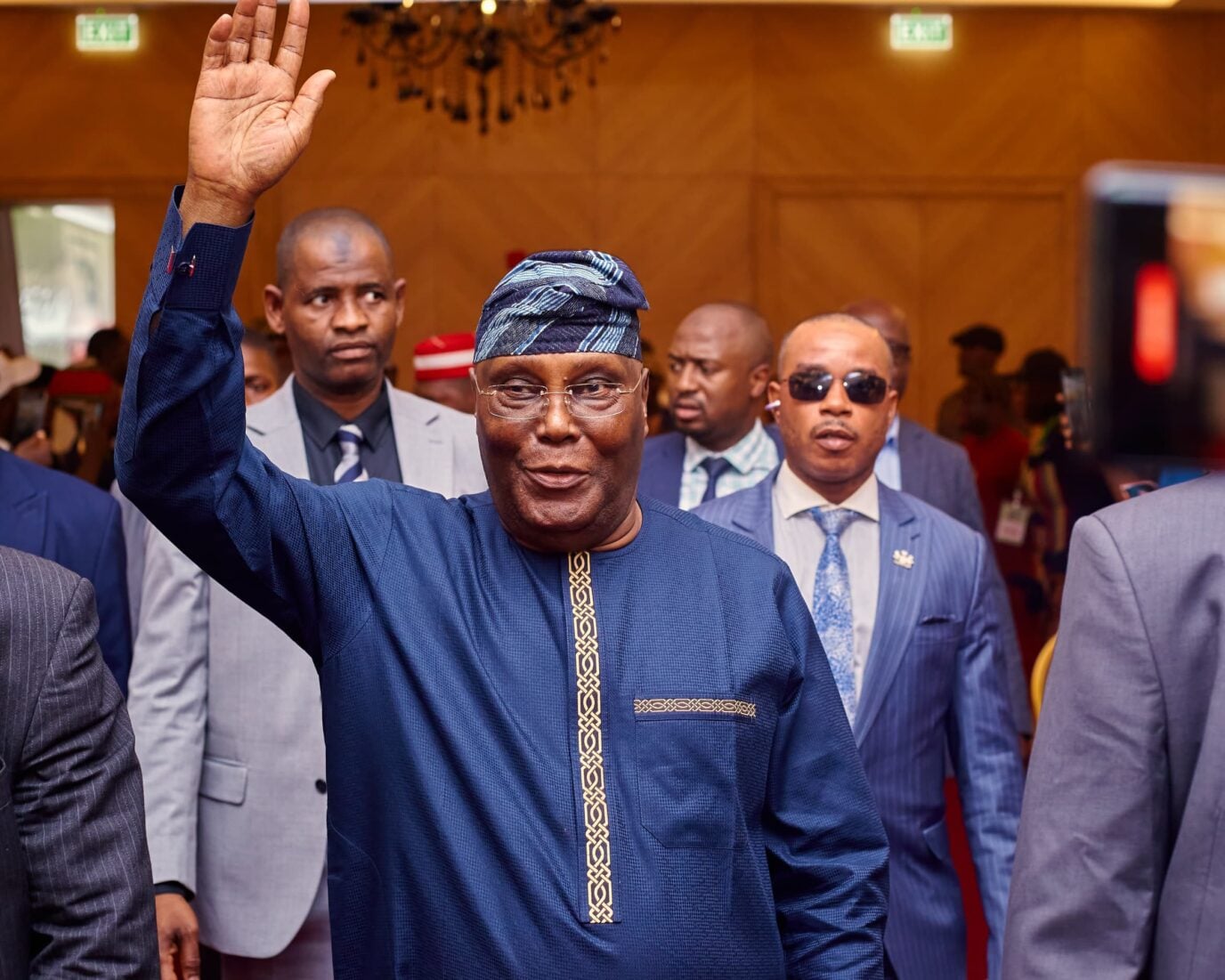
Former Vice-President of Nigeria Atiku Abubakar says he is planning to visit the United States over what he described as the “alarming deterioration” of Nigeria’s security, governance, and economy.
In a statement on Sunday, Paul Ibe, Abubakar’s media aide, said the former vice-president will engage “policy and institutional stakeholders in the US” during the visit, the date of which is yet to be announced.
Ibe said Abubakar noted that “Nigeria is facing a full-blown internal crisis, one that can no longer be downplayed, politicised, or explained away”.
“From the ravaging violence in the North-West and North-East, to the persistent bloodshed in the Middle Belt, and the growing spread of kidnapping and criminality across the country, Atiku warns that the Nigerian state is steadily losing its grip on its most fundamental responsibility: the protection of lives and property,” the statement reads.
Abubakar noted that “the situation has moved beyond isolated incidents to a pattern of systemic failure”, adding that “communities are being overrun, livelihoods destroyed, and citizens abandoned to their fate”.
He argued that any government that cannot guarantee basic security forfeits the moral basis of its mandate.
The former vice-president described the economic hardship confronting Nigerians as “both severe and avoidable”, adding that “rising inflation, a weakened currency, and collapsing purchasing power have pushed millions into distress, while policy inconsistency and lack of strategic direction continue to erode confidence in the economy”.
Abubakar further expressed concerns over Nigeria’s democratic institutions, warning that declining public confidence in governance, accountability, and the electoral process poses a direct threat to national stability.
He noted that any attempt to undermine transparency or manipulate outcomes of the next elections will carry serious consequences for both unity and legitimacy.
Justifying his international engagement, Abubakar rejected the notion that engaging global partners amounts to inviting foreign interference.
He stressed that Nigeria does not exist in isolation and cannot pretend that its internal failures have no external implications.
He said the world already sees what is happening, adding that the real question is whether Nigerian leaders are prepared to confront it honestly.
He reiterated that only Nigerians would decide the country’s leadership but insisted that international partners have a legitimate interest in the stability, governance standards, and democratic health of a country as strategically important as Nigeria