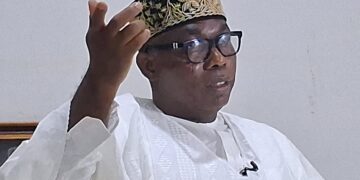
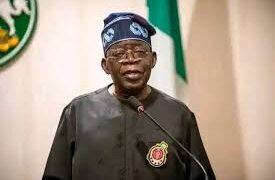
Vice-President Kashim Shettima has revealed that some individuals allegedly tried to sow distrust between him and President Bola Tinubu shortly after their inauguration in 2023, claiming he planned to kill the president and take over power.
Speaking on Tuesday in Abuja during the public presentation of the autobiography of former Head of State Yakubu Gowon, Shettima said the allegations were linked to traditional northern attires he gifted Tinubu during the 2023 presidential campaign.
According to the vice-president, the clothes and caps were meant to help Tinubu connect better with northern audiences during campaign tours across the region.
“When we were campaigning for him to emerge as the candidate of the APC, we were going round the north. So, I got some materials and caps for him to blend with the northern crowd,” Shettima said.
He disclosed that barely three months after they assumed office, some people from his home state of Borno reportedly warned Tinubu against wearing the garments, alleging they had been spiritually manipulated.
“They told him, ‘stop wearing those Shettima clothings. He must have charmed them. And you’re going to die. And he will become the president,’” the vice-president recounted.
Shettima, however, praised Tinubu for dismissing the allegations, saying the president found the claims illogical because the garments were given long before the election victory, when he was still an aspirant.
The vice-president said Tinubu later informed him about the incident after his return from an official trip to China, adding that the president deliberately continued wearing the attires for about a week to demonstrate his lack of belief in such claims.
“These are some of the gimmicks that are taking place in power circles in Nigeria nowadays,” Shettima said.
Drawing parallels with the era of Gowon’s administration, Shettima said Nigeria once enjoyed a greater level of trust across religious and ethnic divides.
He recalled that the family of the Sultan of Sokoto regularly sent “gallons of fura” to Dodan Barracks in Lagos during Gowon’s time as military ruler, noting that the gesture was received without suspicion.
Describing Gowon as “a Christian son of the north” accepted across regional and religious lines, Shettima said the former leader embodied unity and tolerance in a deeply diverse country.
He also praised Gowon’s role in the formation of the Economic Community of West African States, ECOWAS, describing it as a major act of political foresight that strengthened regional cooperation in Africa.
Shettima added that West Africa still needs stronger collaboration on security, diplomacy, youth empowerment, and economic prosperity to tackle present-day challenges.