By Austin Uwuamadi
Banks, power assets, EFCC files, elite settlements and the recurring question of public trust
In Nigerian public life, some names do not merely appear in the news. They return like unsettled accounts – disappearing for a season, resurfacing in another controversy, and reminding the public that some ledgers are never truly closed.
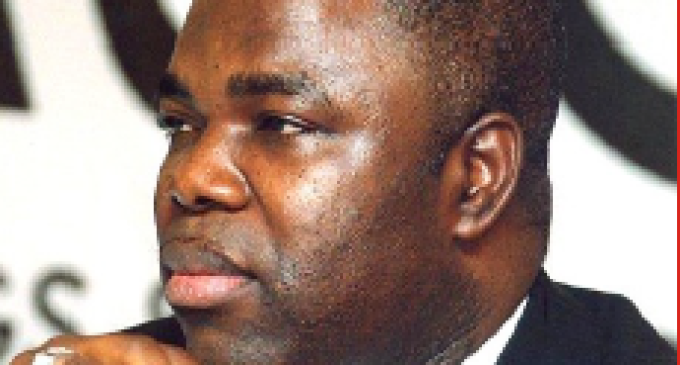
Tunde Ayeni, lawyer, businessman, former chairman of the defunct Skye Bank Plc and a familiar figure within Nigeria’s corporate-financial establishment, is one such name.
For nearly two decades, Ayeni’s name has surfaced around some of the most sensitive questions in Nigeria’s public and private economy: political money, distressed banks, anti-graft investigations, debt recovery, electricity assets, commercial disputes, private settlements, reputational battles and, most recently, fresh reports of EFCC scrutiny involving Polaris Bank-linked facilities, NATCOM, NITEL and MTEL.
This is not gossip dressed as public interest. It is a story about institutional confidence. It is about what happens when the same names repeatedly appear where the numbers are huge, the institutions are fragile, the public consequences are severe and the endings are often unclear.
It must be stated at once: Ayeni has not been convicted in the major financial-crime allegations discussed here. Allegation is not guilt. Investigation is not conviction. Settlement is not necessarily confession. Accuracy requires that distinction.
But public trust requires something more. It requires attention to patterns.
And the Ayeni record is, above all, a pattern — one that raises hard questions about corporate responsibility, regulatory discipline and Nigeria’s troubling habit of treating elite financial controversy as a matter to be managed rather than resolved.
An Early Entry into the Anti-Graft Register
Long before Skye Bank collapsed into regulatory history, before Polaris Bank inherited its anxieties, before the ₦25.4 billion case and before the latest reported ₦36.54 billion and $30 million allegations, there was the Alamieyeseigha affair.
The late Diepreye Solomon Peter Alamieyeseigha, former governor of Bayelsa State, remains one of the defining corruption figures of Nigeria’s Fourth Republic. His 2005 arrest in London, dramatic return to Nigeria, impeachment, prosecution and eventual guilty plea helped shape the public mythology of the Nuhu Ribadu-led EFCC.
It was during that era that Ayeni’s name reportedly first entered the anti-graft conversation. Public accounts have linked his earliest EFCC encounter to suspicions arising from the Alamieyeseigha investigation. Later reports referred to his being questioned over transactions connected to that matter, while other accounts suggested that he was cleared of liabilities arising from the episode.
The details remain imperfectly documented in open sources. What is defensible is narrower but significant: Ayeni’s name appeared early in the orbit of one of Nigeria’s most consequential corruption investigations.
That does not prove wrongdoing. It does, however, mark the beginning of a recurring public theme: proximity to political money, proximity to large transactions, proximity to anti-graft scrutiny — and then a return to prominence without the kind of documentary closure citizens can understand.
Skye Bank and the Collapse of Confidence
By 2016, the story had moved from political money to banking distress.
Skye Bank Plc, once a visible commercial bank, had fallen into serious regulatory trouble. The Central Bank of Nigeria intervened, removed the board and management, and sought to prevent wider contagion in the financial system. By 2018, the CBN revoked Skye Bank’s licence. Its assets and liabilities were transferred to Polaris Bank, a bridge bank created to preserve stability and protect depositors.
That phrase — protect depositors — is the moral centre of the matter.
A bank is not a private casino for directors, shareholders or connected borrowers. It holds salaries, pensions, school fees, petty-trader savings, working capital and household survival. When a bank fails, the damage does not stop inside boardrooms. It travels into ordinary lives.
As former chairman of Skye Bank, Ayeni became one of the most prominent names in the bank’s troubled aftermath. Reports in November 2016 stated that the EFCC detained and questioned him over transactions linked to Skye Bank-era exposures. Investigators were said to be examining funds, facilities and alleged improprieties connected with the bank.
From that point, Ayeni ceased to be merely a corporate grandee. He became a recurring figure in the national conversation about insider influence, distressed banking, depositor funds and the blurred line between private appetite and institutional ruin.
Aso Savings and the Familiar Shape of Elite Scrutiny
Also in 2016 came another episode: Aso Savings and Loans.
Reports, including those based on Premium Times coverage and later cited elsewhere, stated that Ayeni was detained by the EFCC in connection with an investigation involving former Federal Capital Territory minister Bala Mohammed. The matter reportedly concerned an alleged ₦1 billion payment from Aso Savings and Loans Plc to Mohammed.
Ayeni’s reported defence was that the transaction had nothing to do with him personally. He was said to have argued that it occurred in 2010, before he became chairman of the bank, and that investigators merely sought explanations from him as a key stakeholder.
Reports further stated that he was released after he and other officials undertook repayment, with Ayeni allegedly making an initial ₦100 million cheque deposit.
No conviction arose from that episode. But the form was familiar: a financial institution, a politically exposed person, a large sum, EFCC detention, denial of culpability and a negotiated route away from the full glare of criminal adjudication.
One episode may be explained. Two invite attention. Repetition becomes a public problem, even where it is not proof of criminal guilt.
The ₦25.4 Billion Question
The allegations eventually moved from questioning rooms to courtrooms.
In December 2018, the EFCC arraigned Ayeni alongside Timothy Oguntayo, former managing director of Skye Bank, before the Federal High Court. The charges concerned alleged diversion of bank funds. Both men pleaded not guilty.
In 2019, the EFCC filed a 10-count charge involving Ayeni, Oguntayo and two companies — Control Dredging Company Limited and Royaltex Paramount Ventures Limited. The charge concerned alleged money laundering to the tune of ₦25,415,080,000.
The EFCC’s public statement in May 2019 included a particularly grave allegation: that Ayeni, while chairman of Skye Bank, allegedly converted ₦17,415,080,000 taken in cash from the bank’s suspense account.
That allegation sits at the centre of the Ayeni ledger.
It was not rumour. It was not roadside speculation. It was a formal anti-graft charge. The defendants pleaded not guilty, and that plea must be respected. But the seriousness of the allegation cannot be minimised. When a former bank chairman is accused of converting billions from a suspense account, the question is no longer simply personal reputation. It becomes a matter of banking discipline, regulatory failure and depositor protection.
Then came the most revealing turn: not conviction, but withdrawal.
In July 2022, Punch reported that the EFCC had withdrawn the ₦25.4 billion case against Ayeni and Oguntayo after what it described as a secret settlement. According to the report, certified court records showed that prosecutors informed the Federal High Court that a settlement had been reached. The report further stated that the settlement may have involved forfeiture of about ₦15 billion in cash and assets, though the final recovery figure was not publicly disclosed.
An EFCC lawyer was quoted as telling the court that the prosecution had received a Lagos property in furtherance of settlement. AMCON reportedly valued that property at ₦10 billion, not the ₦15 billion value placed on it by the defendants, thereby requiring an additional ₦5 billion to bridge the gap.
Here lies the public-trust injury.
A withdrawn charge is not an acquittal after trial. A settlement is not necessarily an admission of guilt. But to the Nigerian public, the sequence is wearyingly familiar: arrest, charge, adjournment, negotiation, partial recovery, withdrawal, silence.
The powerful do not always defeat the system by proving innocence. Sometimes they outlast it. Sometimes they bargain with it. Sometimes prosecution becomes accounting.
If depositors’ funds were allegedly diverted, Nigerians deserved clear answers. How much did the state say was taken? How much was recovered? Was recovery made in cash, property or both? Who valued the assets? Who approved the settlement? Why was the full arithmetic not disclosed?
Without answers, settlement looks less like justice and more like theatre — a velvet rope through which the powerful exit while the public stands outside, watching.
Power Assets and Public Consequences
The Ayeni story did not remain confined to banking.
His public link to Integrated Energy Distribution and Marketing Limited, the core investor in Ibadan Electricity Distribution Company, brought the matter into the electricity sector. IBEDC is no boutique asset. It distributes electricity across Oyo, Ogun, Osun and parts of Kwara, Ondo and Ekiti. Its performance affects homes, hospitals, schools, farms, factories and small businesses.
A power distribution company is not merely a balance sheet. It is the nervous system of regional economic life.
In January 2022, Daily Trust reported that AMCON had taken over IBEDC over IEDM’s alleged inability to clear an acquisition loan from Skye Bank, later Polaris Bank. IEDM had acquired a 60 per cent stake in IBEDC during the 2013 power-sector privatisation exercise, with acquisition finance reportedly tied to bank loans that later became problematic.
AMCON’s reported position was that it had been appointed receiver-manager over IEDM assets following default under a loan purchase and servicing arrangement with Polaris Bank.
That detail matters. The IBEDC dispute returned the public once more to the Skye Bank/Polaris orbit: bank exposure, acquisition finance, repayment stress, debt recovery, regulatory intervention and an asset of serious public consequence.
There were further governance concerns. Reports indicated that NERC had earlier fined IBEDC ₦50 million over failure to secure repayment of an interest-free loan allegedly granted by IBEDC’s board to its core investor group.
Ayeni and the investor side contested aspects of the debt and takeover narrative. In February 2023, TheCable reported that a Federal High Court in Lagos restrained AMCON from selling IBEDC pending final determination of the dispute.
The careful conclusion is this: through IEDM, IBEDC became entangled in AMCON receivership action and litigation over alleged loan default connected to Polaris Bank exposure. The matter was contested. The sale was restrained.
Even that cautious formulation is troubling enough.
Nigeria’s electricity privatisation was meant to deliver efficiency, investment, metering and better supply. Instead, many DisCos became theatres of debt, weak governance, underinvestment and public frustration. Consumers still face estimated billing. Businesses still burn diesel. Hospitals still run generators. Factories still price electricity insecurity into production.
If a core investor in critical infrastructure becomes trapped in acquisition-loan disputes and regulatory sanctions, Nigerians are entitled to ask whether public assets were handed to investors with enough capital depth, discipline and long-term seriousness.
Electricity cannot be run like a speculative side bet.
The Private Persona and Public Credibility
Ayeni’s corporate controversies have also been accompanied by reputational turbulence in his private life. The claims of Abuja lawyer Adaobi Alagwu, who alleged that Ayeni misled her into a customary marriage and fathered her child, entered the public domain and became part of Nigeria’s scandal economy. Ayeni denied key aspects of the claim, reportedly admitting only to a relationship which he said had ended earlier.
Such matters would ordinarily remain private. They are not the heart of the financial questions surrounding him. But reputation does not exist in compartments. When private controversy lands on a public image already burdened by unresolved financial allegations, it deepens the conversation about judgement, restraint and credibility.
For years, Ayeni’s public persona carried the familiar accessories of elite success: wealth, access, philanthropy, social visibility and the polished ease of a man at home among power. But against the backdrop of bank distress, disputed loans and anti-graft scrutiny, glamour can begin to read differently.
That is the danger of wealth without transparent provenance. It dazzles before it is audited. It charms before it is questioned. It purchases admiration before anyone asks who ultimately paid the bill.
The Door Opens Again
Then, in April 2026, reports stated that Ayeni had again been arrested by the EFCC in Abuja over fresh allegations involving ₦36.54 billion and $30 million.
According to reports by Punch, TheCable, QED.ng, The Times Nigeria and others, the investigation concerns loans allegedly obtained from Polaris Bank through companies linked to Ayeni. The facilities were reportedly intended for marine security operations, electricity distribution contracts and estate development.
Investigators were said to be examining whether the funds were diverted to other uses, including the acquisition of telecommunications assets linked to NITEL and MTEL through NATCOM. The EFCC was also reported to be probing several companies allegedly connected to him.
These remain allegations. They must be treated as such. But the symbolism is difficult to ignore.
Again, the same ingredients return: Polaris Bank, depositor-linked funds, infrastructure loans, electricity, marine security, real estate, telecommunications assets, linked companies, alleged diversion and EFCC custody.
If the Skye Bank case was the original banking wound, the 2026 allegations look, at least publicly, like the scar reopening.
A man may be investigated once by accident, twice by political misfortune, perhaps even three times by coincidence. But when the public record stretches from Alamieyeseigha-era scrutiny to Skye Bank charges, Aso Savings questioning, IBEDC receivership, OMSL disputes, opaque settlements and fresh Polaris-linked allegations, the question is no longer simply: what happened this time?
It becomes: how many times can the same system meet the same man and still fail to produce finality?
The Ledger Nigeria Must Confront
The Tunde Ayeni story is not merely about one businessman. It is about a system that repeatedly approaches elite financial controversy with noise and exits with silence.
Nigeria knows the choreography too well.
First, the arrest.
Then the headline.
Then the bail.
Then the adjournments.
Then the settlement.
Then the withdrawal.
Then the silence.
Then, years later, another arrest.
This is not accountability. It is ritual.
When poor Nigerians face the criminal process, punishment is often swift and humiliating. When powerful financial actors face allegations involving billions, the process can become a negotiation over assets, influence, valuation and time.
That is the civic wound.
If asset forfeiture becomes the price of freedom, deterrence becomes optional. If settlements are not disclosed, recovery becomes rumour. If bank executives can negotiate away allegations involving depositors’ funds without a full public account, banking discipline becomes theatre. If power-sector investors acquire critical infrastructure through leveraged finance and then sink into debt-recovery battles, privatisation becomes another word for elite experimentation.
Ayeni’s public record stands at the intersection of these failures.
He is the banker whose name outlived the bank.
The investor whose electricity asset became entangled in AMCON receivership.
The businessman whose disputes repeatedly entered police and anti-graft channels.
The corporate figure whose settlements raised more questions than they answered.
The recurring name in a system that arrests loudly and explains poorly.
That is the corporate and fiscal indiscipline at the heart of the matter.
Not one allegation.
Not one case.
Not one bank.
Not one power asset.
Not one EFCC invitation.
A pattern.
And in public life, patterns matter.
Until Nigerians are told what happened to the Skye Bank funds, how much was recovered in the ₦25.4 billion settlement, who valued the assets, what AMCON recovered, who approved the Polaris-linked loans now reportedly under investigation and why major elite financial cases keep ending without public finality, the Ayeni story will remain more than biography.
It will remain a national audit note.
A warning.
A ledger.
A creditor’s masquerade in which banks fail, public assets wobble, regulators intervene, anti-graft agencies announce staggering figures, settlements are whispered — and the Nigerian public is left holding the unpaid balance.
• Iwuamadi writes from Lagos