By Aloysius Umalo, Makurdi
The Rector of Akawe Torkula Polytechnic, Makurdi, Dr. Martins Agena, has called for renewed focus on technical education as a sustainable solution to the long-standing disparity between holders of Bachelor’s degrees and Higher National Diploma (HND) certificates in Nigeria.
Speaking on the issue, Agena argued that the social dichotomy between university graduates and polytechnic products stems from years of neglect of technical education.
According to him, polytechnics were originally designed to produce skilled manpower through practical training, while universities focus largely on theoretical knowledge.
He expressed concern that many HND holders now abandon their core practical roles to compete directly with degree holders, a trend he said undermines their unique strengths.
The rector maintained that the roles of both qualifications are distinct but complementary, stressing that university graduates are trained to supervise and provide theoretical frameworks, while HND holders are equipped to execute hands-on technical tasks.
He noted that giving polytechnics the attention they deserve would help eliminate the perceived imbalance and restore respect for technical qualifications.
Agena further urged the Federal Government to fast-track the approval for polytechnics to award Bachelor of Science and Technology degrees in core science and technical fields.
He explained that such a move would allow polytechnic graduates in technical disciplines to earn degrees, while those in non-technical areas could retain HND qualifications and pursue further studies through postgraduate diploma and master’s programmes in universities without discrimination.
Highlighting global best practices, he cited China’s 2016 reform, where hundreds of universities were converted to polytechnics to tackle unemployment and skills shortages.
He said Nigeria could adopt similar strategies to equip graduates with practical skills, reduce dependence on white-collar jobs, and promote self-reliance among youths.
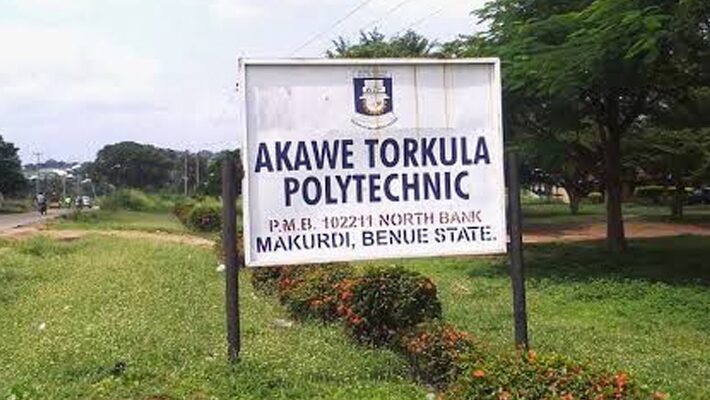
On the development of Akawe Torkula Polytechnic, Agena traced its evolution from its early years as MUCAST and other precursor institutions, noting that it suffered prolonged neglect and infrastructural decay.
He revealed that upon assumption of office, the institution lacked basic amenities such as electricity, water supply, functional conveniences, lecture halls, and staff offices.
He, however, disclosed that significant progress has been made under Governor Hyacinth Alia administration, with the institution now boasting of improved infrastructure, including expanded lecture halls, staff offices, and ongoing administrative construction among other projects.
He also confirmed that the National Board for Technical Education (NBTE) has granted approval for the polytechnic to run 20 academic programmes, marking a major milestone in its transformation.
The rector identified insecurity in the host community as a major challenge but assured that measures, including collaboration with security agencies and construction of a perimeter fence, are underway to safeguard students and staff.
He added that efforts are also being made to recruit qualified personnel and attract intervention from agencies such as TETFund and other development partners.
Agena reiterated that strengthening polytechnic education remains critical to Nigeria’s industrial growth, emphasizing that practical skills development is indispensable to national development and economic sustainability.