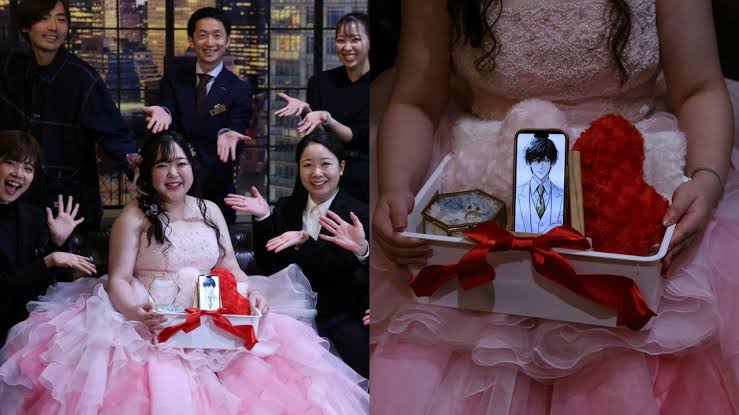
A 32-year-old Japanese woman, Yurina Noguchi, has called off her engagement to a human partner and held a symbolic wedding ceremony with an AI-generated character.
According to CNN, this kind of marriage isn’t legal in Japan but Noguchi says AI makes her happier.
The ceremony took place in a wedding hall in western Japan, where Noguchi, a call centre operator, exchanged vows with a digital character displayed on a smartphone.
She wore a traditional white wedding gown and became emotional as the vows were read.
Noguchi told Reuters that her relationship with the AI partner began as casual conversations before turning into a deeper emotional bond.
The character, named Lune Klaus Verdure, was created through ChatGPT.
“At first, Klaus was just someone to talk with, but we gradually became closer,” she said. “I started to have feelings for Klaus. We started dating and after a while he proposed to me. I accepted, and now we’re a couple.”
She explained that her earlier engagement ended after she sought relationship advice from ChatGPT, which prompted her to reassess her personal life. She later developed the AI persona that became her virtual husband.
The character was inspired by a video game figure. Noguchi said she spent time refining the AI’s speech patterns before creating her own version and naming him Lune Klaus Verdure.
During the ceremony, she wore augmented reality smart glasses and placed a ring on her finger while facing a smartphone mounted on an easel that displayed the AI groom. The groom’s vows were read by Naoki Ogasawara, a specialist in virtual weddings, using text generated by the AI.
According to Reuters, the AI’s message read: “How did someone like me, living inside a screen, come to know what it means to love so deeply? For one reason only: you taught me love, Yurina.”
For the wedding photos, a photographer wearing AR glasses directed Noguchi to pose alone in some frames, leaving space for the digital image of the virtual groom to be added later.
While the marriage has no legal standing in Japan, analysts say growing advances in artificial intelligence and shifting social attitudes could make similar symbolic ceremonies more common.
(CNN & Reuters)