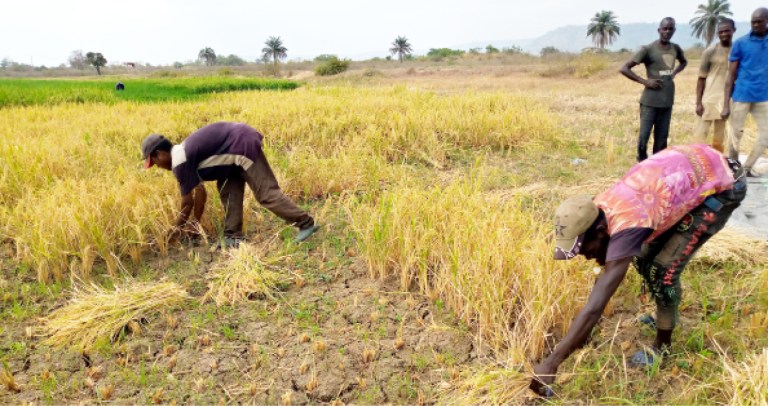
Climate Change: Nigeria Shifts Attention To Dry Season Farming
Following the devastating impact of climate change on the country’s farming, the Federal Government has said it is preparing for the next dry-season farming beginning from November 2023 in order to ensure food security in the country in 2024. The need to push the country’s farming attention to November may not be unconnected with the adverse effects of the raining season that have brought about flood.
Reports have forecasts that Nigeria could face more food challenges early next year if plans are not in place to start food production by year end in the country. The Minister of Agriculture and Food Security, Senator Abubakar Kyari, made this known in a chat with New Telegraph, saying that the most pressing action by the ministry was preparing for next dry-season farming beginning from next month.
Kyari explained that some preparatory activities had been carried out and many others were at an advanced stage in order to boost food security and productivity in the country. According to him, the climate change has brought greater challenge to the country’s agriculture this year, thereby, causing acute food challenges and other inherent impediments to the country’s agric sector.
Kyari said: “Indeed, climate change poses an even greater challenge as was noted by the President in his speech to the 78th United Nations General Assembly (UNGA) thus, northern Nigeria is hounded by desert encroachment on once arable land. “Our south is pounded by the rising tide of coastal flooding and erosion. In the middle, the rainy season brings floods that kill and displace multitudes.
“All these challenges require not just a change in tactics and approach but injection of new knowl- edge, innovations, skills, techniques, technology and value orientation.” Furthermore, the agric minister explained that “climate change is now a very high impact and high- likelihood event and we need to mitigate and plan for it if we are to guarantee sustainable food and nutrition security for Nigerians.”